The Impossible Calibration
Mar 07, 2026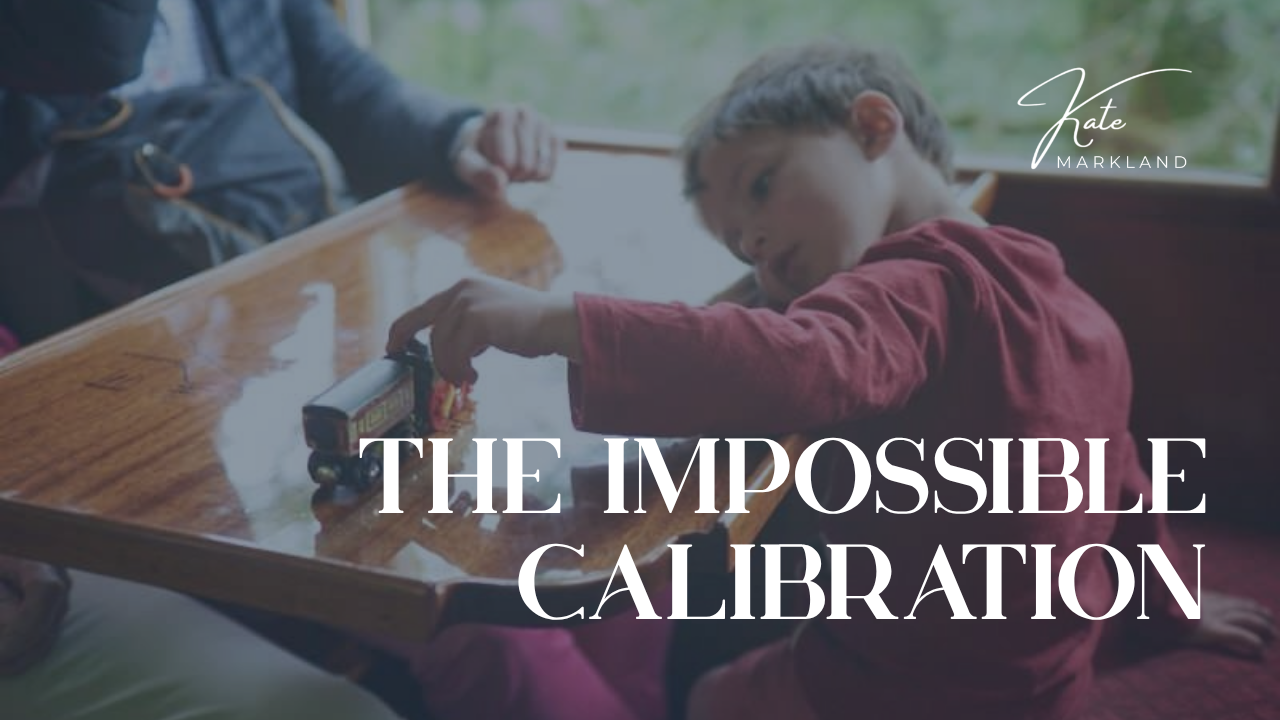
Every child needs a mother who refuses to stop telling the truth about them. What that costs the mother is something the system has never been asked to reckon with.
Many of the professionals who sit across the table from a mother fighting for her child are parents themselves. They have children they love. They know, at some level, what it means to be responsible for a small person who depends entirely on you. And yet something happens when they enter the professional role that causes that knowledge to recede. The humility that parenting teaches, the daily reminder that you do not always know, that children surprise you, that love does not make you omniscient, seems to get set aside when the lanyard goes on.
I want to say something about what it actually costs a mother to make a stand.
She is not praying for an easy life. She long ago stopped expecting one. What she is praying for is the strength to get through another day of being ignored. By social workers who have already made up their minds. By courts that move slowly and do not have to live inside the damage their slowness causes. By schools that should be on her child's side and are not. She is carrying all of that, and she is doing it largely alone, and she is doing it while trying to ensure her child never feels the full weight of what she is carrying, because her job, her primary job, the one that never gets logged in a file or praised in a report, is to make sure her child knows he is loved and that he matters.
And then she walks into a room and has to perform the impossible calibration.
If she is too emotional, she is judged incompetent. Unstable. Evidence of the very concerns that brought her there. If she is too controlled, too precise, too clinical in the way she presents her evidence, she is judged cold. Heartless. A mother who has somehow intellectualised what should have broken her, which is itself suspicious. The window in which she is permitted to exist is extraordinarily narrow. Grace and humility are her only instruments, and she has to play them perfectly in a room that was not designed for her to win.
What she is actually doing, in that room, is trying to get one thing heard: my child is loved. My child matters. My child has a voice and a future and an inner world that your report has not come close to capturing. That is not a clinical argument. It is not a legal submission. It is the most fundamental thing one human being can say to another on behalf of a child who cannot say it for himself.
The professionals in that room are parents too. I would ask them to remember what they know from that. Not the professional knowledge. The other knowledge. The one that lives in the body. The one that knows, without needing it written down, that a child needs to know they are loved. That a mother who refuses to stop saying so is not the problem. She is the point.