The Environment Shapes the Child. Change the Environment.
Jun 11, 2025
Every child has a story worth telling, and the environment they inhabit every day either makes that story feel possible or teaches them to keep it to themselves.
Children do not develop in a vacuum. They develop inside environments: families, classrooms, communities, institutions, systems. And those environments are not neutral. They are constantly teaching children something about who they are, what they are worth, and what kind of world they are living in.
Complete state wellbeing, the kind that is genuinely protective and genuinely lasting, is not primarily a property of the individual child. It is a property of the environment that child inhabits. We have known this for a long time. The research on adverse childhood experiences has been accumulating since the 1990s. The research on trusted adult relationships, physical activity, creative expression, and belonging all points in the same direction. The conditions children live and learn in shape their development far more powerfully than any programme delivered to them within those conditions.
And yet our response to children's distress remains overwhelmingly focused on the individual. We assess the child. We categorise the child. We deploy interventions toward the child. We do not often ask whether the environment has changed, whether the conditions that produced the distress in the first place are still intact, whether the system itself is functioning or failing.
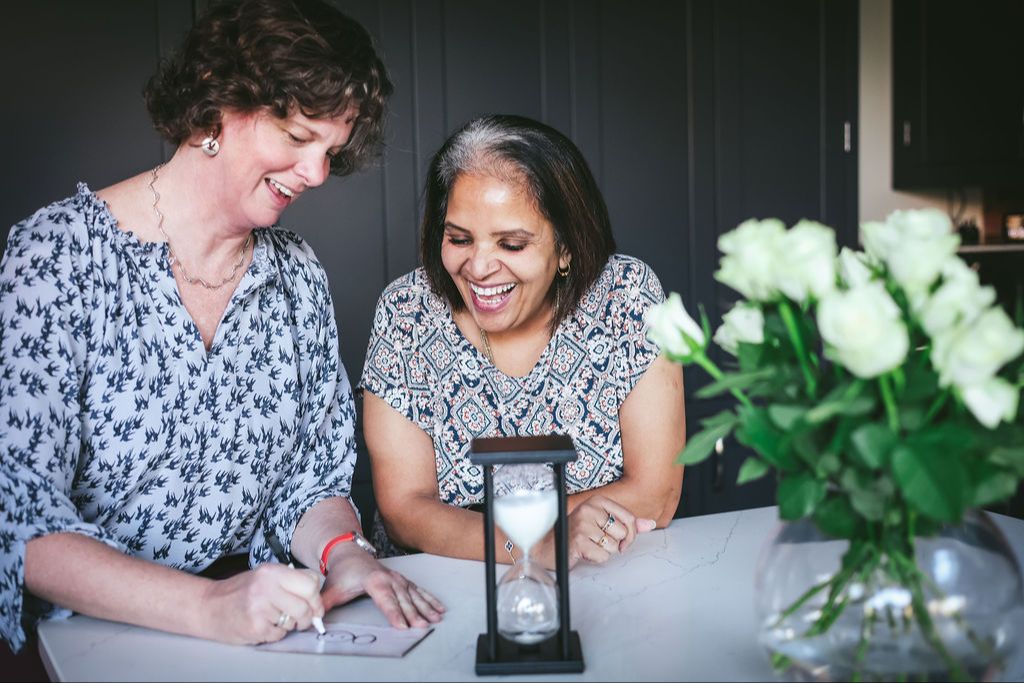
This matters for families. The environment you create at home, the stories you tell, the way you respond when your child struggles, the space you create for their imagination and their voice, these are not soft extras. They are the architecture of your child's sense of self. The family that asks "would you like to be the hero of your own story?" and writes down every word without correcting is building something that no school programme can replicate, because it is built on the most powerful thing in a child's environment: the knowledge that they are seen and heard by the person who matters most to them.
This matters for schools. The classroom is an environment, and it is teaching children something about themselves every day. A classroom that corrects before it listens, that measures before it nurtures, that prioritises compliance over creative expression, is a dysfunctional environment for wellbeing regardless of how its results look on paper. A classroom that gives children complete creative freedom, that publishes their stories, that treats their imagination as evidence of capability rather than raw material to be shaped, is doing something clinical programmes cannot: it is changing what children believe about themselves at the root.
This matters for systems. The institutions that surround children have a responsibility that goes beyond identifying and responding to individual distress. They have a responsibility to ask whether they are themselves part of the dysfunctional environment. Whether the systems designed to protect children are actually producing the conditions for children to develop. Whether the measures used to assess progress are measuring what actually matters.
Gabriel's story began in the most dysfunctional environment imaginable: a child separated from his mother, one hour a week on a screen, no certainty, no control. What protected him was not a programme. It was one functional element in an otherwise broken environment. A trusted adult who listened. A story that was entirely his. A voice that was captured exactly as it came and given back to him as proof that it was worth something. That is what complete state wellbeing looks like at its most elemental. Not the absence of difficulty. The presence of one person who sees you clearly and does not look away.