A Mother and The Adventures of Gabriel
Dec 19, 2025
"Mum, Use All Your Skills": How Friday Night FaceTime Calls Became an International Literacy Movement
This blog is adapted from my interview with Brian Gerrish at UK Column, where I shared the full story of how Gabriel and I turned forced separation into something extraordinary.
When three police cars pulled my father over on 23rd Christmas 2024, looking to arrest me, my mother, who'd had a head injury just six months before, was in the passenger seat. The police were searching for me. When I called to ask on what grounds they wanted to arrest me, there was silence.
"You're looking for me. Three police cars stopped my dad. On what grounds?"
No response. I even emailed the police constable directly. Nothing.
This is what living under family court orders feels like. Constant threat. Constant fear. Yet somehow, in the middle of this nightmare, my son Gabriel and I created something that's now reaching children across four countries and being featured in international education press.
How? Gabriel told me: "Mum, use all your skills."
The Day They Took Him
Gabriel was forcibly removed from my care the week before he turned 10. Armed police came to where we were staying. They dragged him screaming down the driveway in his pyjamas and put him in the cage in the back of a police van.
Nobody had contacted me for conversation beforehand.
I'm a former physiotherapist who ran my own clinics for 20 years. I taught anatomy and physiology of business to other clinic owners. I'm educated, professional, capable. Yet the child protection system deemed me incapable of looking after my son, based on conjecture, not fact.
The court allowed me one hour weekly on FaceTime. That was it. One hour to maintain a relationship with my child.
I could also write to him. So I did. Every day at first, then weekly parcels based on whatever inspiration I could find from the calendar, New Year, Valentine's, St. David's Day. Anything to stay connected and ensure he knew I loved him.
Finding Gratitude in Hell
When I first watched UK Column's coverage of other separated families, particularly Leah Summers describing her experience with Gloucestershire Children's Services, and Claire and Bethany's story where removal was similar to Gabriel's, something shifted.
I found gratitude.
Not for the situation. But for what I still had: Gabriel's age meant he could engage in conversation. We did have contact. I knew where he was. I could write to him.
"You have to find appreciation for what you've got and what you can do with what you've got," I realised. "You've got to find a way of getting to a solution."
Gabriel said it clearly: "Mum, use all your skills."
All my skills meant I was going to read, speak, create, whatever we could do within the constraints we faced. Because ranting and raving on a soapbox wasn't going to help either of us.
My only option was to empower my son.
When Storytelling Became Our Lifeline
Since Gabriel was tiny, he'd loved being read to. My Yorkshire grandfather used to recite monologues to me as a young girl endlessly, I still hear his accent in my head every morning, getting me through hard days. My mother read to my brother and me at bedtime until we finished junior school.
So when Gabriel and I faced separation, returning to storytelling felt obvious.
Our first FaceTime call after removal, probably six weeks after he was taken, we were both shell-shocked. I'd gone into his bedroom and found a Michael Morpurgo book, Puffin Keeper. We just read. I read to him, we looked at the illustrated pictures together.
It took us about a month to get through that book. Then he wanted to read to me. We spent about six months reading to each other, playing pen and paper games, hangman, noughts and crosses, his favourite was doodling two contrasting things like "a snowman sunbathing" and guessing what it was.
Then we got an illustrated copy of Treasure Island. The main character is a little boy named Jim, my father's name, Gabriel's granddad. When we finished, something just seemed obvious.
"Should we create a story where you are the hero?"
Instantly: "Yes."
I've now asked 465 other children that same question. Nobody's said no to me yet.
The Process We Didn't Know We Were Creating
"I want to defeat a sea monster," Gabriel said.
"Okay, what does your sea monster look like?"
"Well, he's got two heads..."
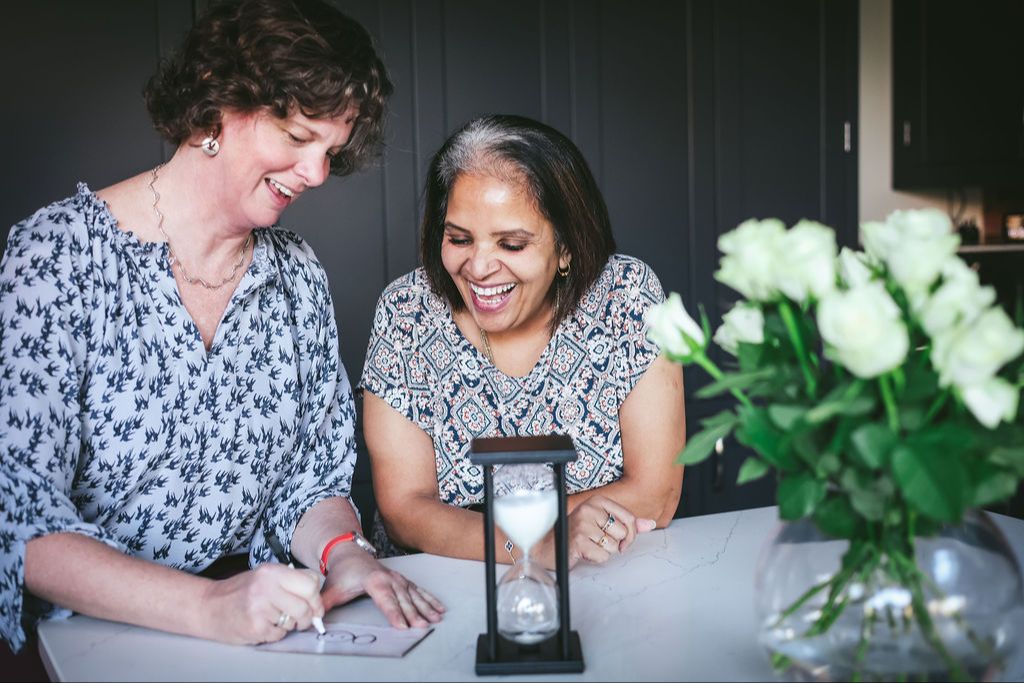
And I started doing what I'd done for 20 years as a physiotherapist: extracting stories. Tell me more. Tell me more. If somebody gets stuck, teasing out a little bit more detail.
I scribbled notes down. Not sentences, just notes. Then I'd type it up during the week, read it back to him the following Friday: "Is this what you meant?" He'd add his edits.
"No, no, Mum. I wouldn't just walk past an owl. An owl would give me a clue, some wisdom. I'd have to solve a puzzle there."
"Okay, what puzzle are you going to solve?"
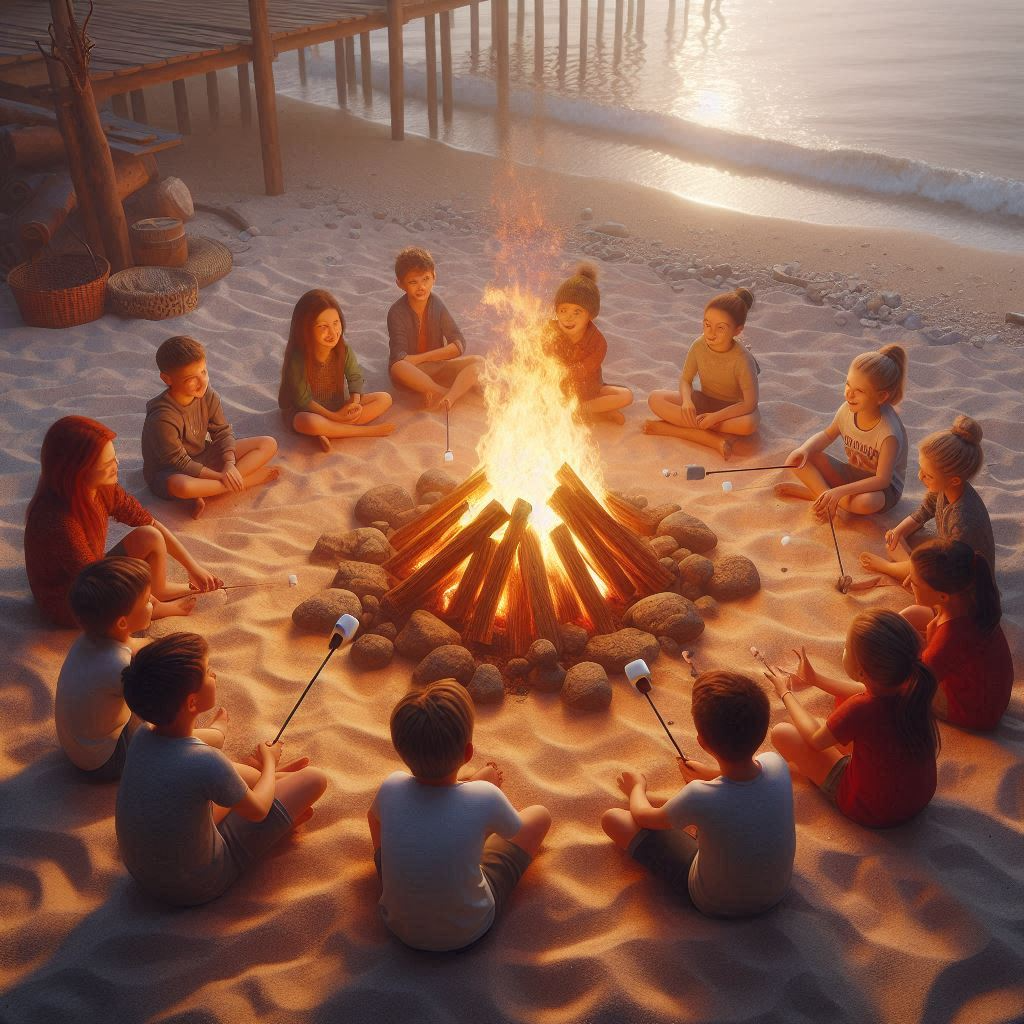
My father started creating images using AI art. I'd show Gabriel the options. "Yeah, that's my owl. That's my sea monster."
The most significant thing: Gabriel had a sidekick. He was never alone in his stories. The sidekick was obvious to us both, a platypus. It had been his favourite cuddly toy since he was tiny, and his platypus represented possibility: it can swim, it can do anything, it's a special creature.
He had a Robin to his Batman throughout every story.
"Mum, It's a Book"
After about eight weeks, we had six short stories. I put them into a Word document just to see my desktop again so I could do my normal day job.
"Mum. It's a book."
"Okay," I thought. "I'll get two printed, one for you, one for Granny and Granddad."
"No, Mum. It's a book. It's a real book."
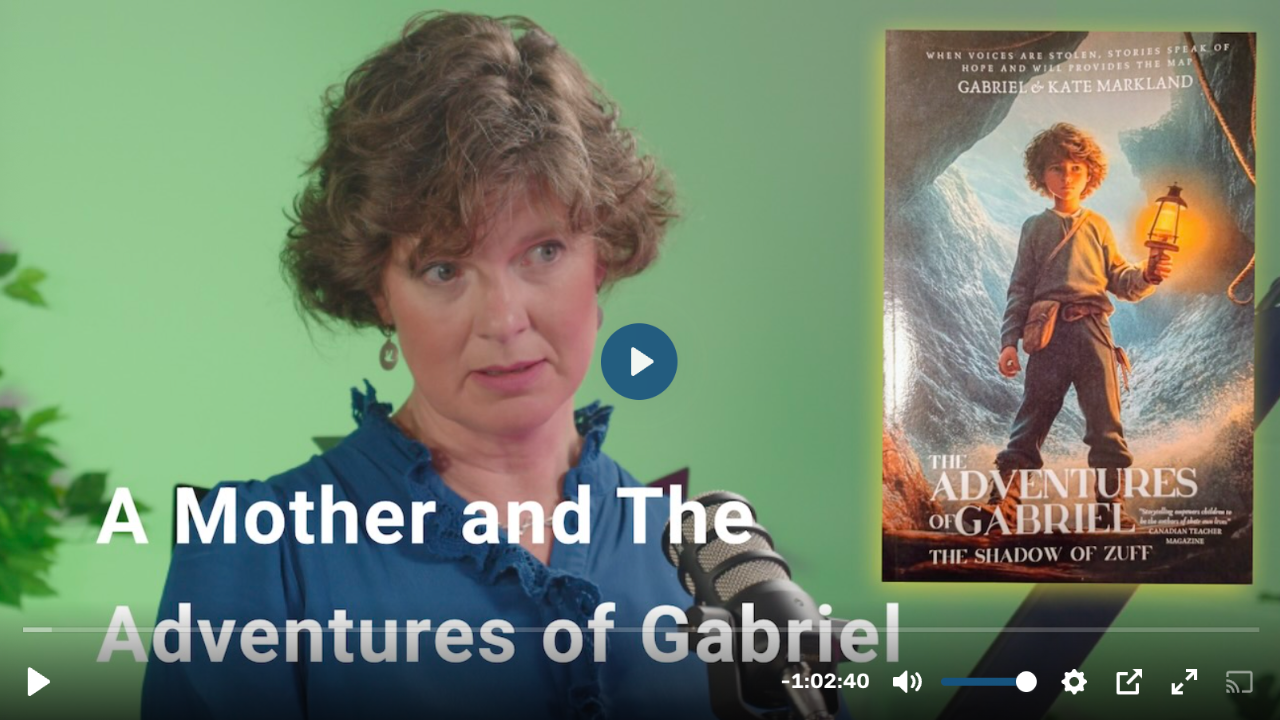
I dug up a contact from someone who'd spoken on my podcast about self-publishing. Sent it over. And soon we had The Adventures of Gabriel a book of six short stories with beautiful illustrations.
The metaphor I was consciously weaving in: Don't give up. If you don't give up, we'll find a solution.
When Contact Was Removed for a Month
In December 2024, Gabriel's birthday, Christmas, New Year, contact was removed for the entire month. We didn't speak.
But by then we'd started plotting Book Two. Gabriel was clear about the concept: "Can we bring a dodo back to life? Can we visit endangered animals around the world and find their wisdom?"
So I had something constructive to do. When contact was removed, I just kept writing. It was hard, it was dark, but I kept writing. Doing something for Gabriel.
In January, contact resumed.
Book Two became The Shadow of Zuff, a full 260+ page novel with the theme of hope. Can we restore hope? Can we bring hope back to life?
I Had to See Myself Smile
A good friend who knew me from healthcare was running a networking event in Birmingham. "Kate, you're coming. And you're not talking business or healthcare. You're going to talk about that book."
I don't know how I got through the 10-minute talk. But he kept saying: "Keep talking. Keep talking about that book."
Another friend who works in web development saw me speak. "Your presentation's a mess," he said honestly. "But you've got something here. What you're doing is special."
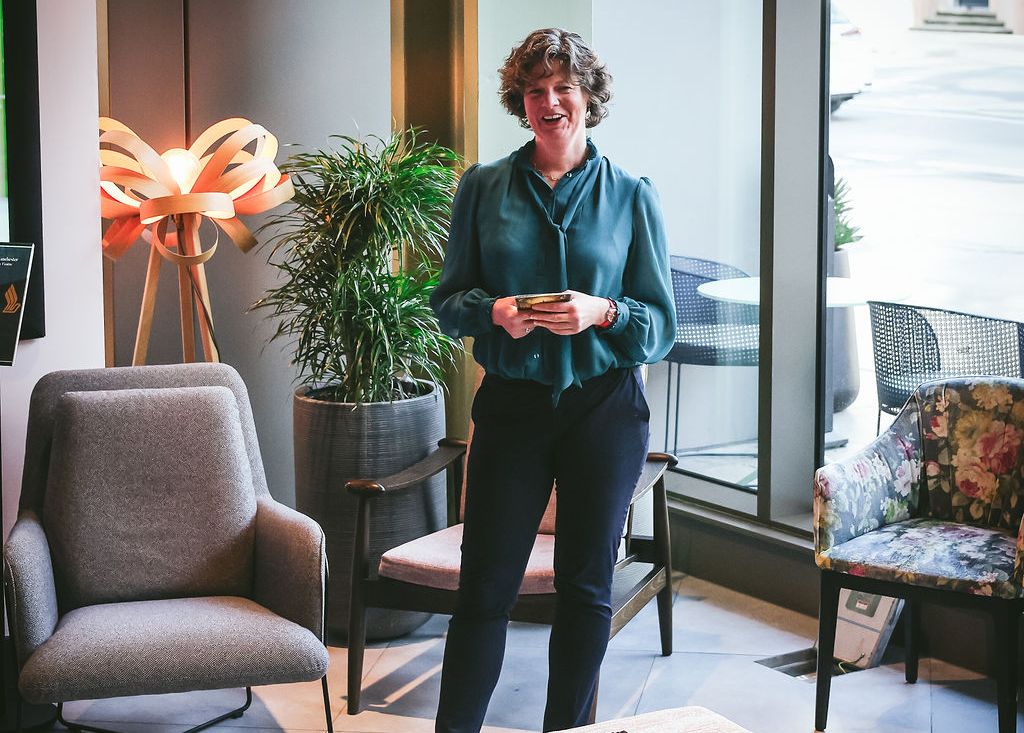
I also did something small but crucial: I got my photo taken. I needed to see myself smile. I didn't know I needed that until I got the photos back.
You can talk to separated mothers and they never smile. But when you do get them to recount something positive, do something where they smile, that's an instant change of energy.
When you look after yourself, when you're in a better place and stronger, then you fight better. If you're always feeling down, pressured, tired, stressed, anxious, you're not in a position to fight.
Creating this book gave Gabriel therapy. It gave me therapy. The confidence was growing in both of us.
From One School to Nine
A family friend who works in education in Bradford invited me to do a workshop. Sixty Year 6 children. They loved it. They loved being the hero of their own story.
"Miss, miss, can I go to a football pitch in my story?"
"Anything's possible."
Children the teachers thought had combinations of labels were putting their hands up to share stories. Small girls were standing up to taller boys: "Yeah, that's all right, but what's the backstory? Alien apocalypses don't just happen like that. I want the backstory."
Teachers were saying: "Wow, they spoke. That child didn't have much confidence to speak in front of others."
The wow factor went from one school to nine schools. 465 children total.
And every single child evaluated the workshop. I asked them all: "What was it like to be the author of your own story?"
Their answers:
"I didn't know I had so many stories inside me until I was allowed to let them out."
"I like writing my own story with no rules. Only my rules, not anybody else's rules."
"It was so much more fun than any English we've done so far. I didn't get told that it was wrong or bad."
One teacher's message: "You can do all the teaching, but when it comes to story writing, children just shut down. StoryQuest changed that. They're joyful, buzzing, excited, asking 'When can we do this? Can we do this tomorrow? Can we come back early from lunchtime?'"
The Media Interest
Yorkshire Post covered us. Then BBC Radio Gloucestershire. MSN. Yahoo. Then Canadian education magazines, first one, then another.
Now we're getting international education media interest from North America to Asia.
One Bradford teacher summed it up: "You found a way to get children to write. If they can write, I can teach."
When the schools in Manningham (inner-city Bradford) had children reading their stories on community radio at 4pm every evening for a week, those broadcasts became some of the most consumed content we've done. Year 6 children, 10-11-year-olds, reading their own stories with such quality that radio hosts were genuinely impressed.
What 20 Years of Physiotherapy Taught Me About Listening
I didn't realise I was applying physiotherapy skills to storytelling until people kept asking detailed questions about my process.
In physiotherapy, you create an environment where people are comfortable sharing their story. The answer always lies within somebody's story. When someone rates their back pain story to you, they work at a desk all day and it hurts, but they're better when walking, well, there's your clue.
Twenty years in practice, maybe 5,000 people through my clinics. I could probably say one person brought their story written down. Everybody else orated their story.
But you have to create safety. Ask open-ended questions. Clarify gaps. Do the verbal handshake, repeat back what you've understood and check: "Have I got this right?"
That's exactly what I was doing with Gabriel. And now with 465 children.
Tell me more. What happens next? Is this what you meant?
The entertainment was within the child. You don't need to compete with their iPad. Let them express themselves.
Living Under Threat
While all this success is building, I'm still living less than a mile from Gabriel in Cheltenham, sitting on FaceTime, unable to see him.
I've been threatened with arrest repeatedly. When I ask on what grounds, there are never any grounds. They'll even deny having contacted me.
Gabriel lives under threat from social services: should he see me, police will be involved. That's psychological pressure on a child.
Yet in May, the police and crime commissioner in Cheltenham wrote a report that Gloucestershire Police had failed children protection audits.
The UN human rights visit to the UK described harms to mothers and children in family courts. The silencing of children. The government's own 2020 Harms Report documented it. The Casey Report showed the same themes.
How many more reports do a mother and child need?
What I Submitted to Parliament
When the Public Accounts Committee opened an inquiry into family court failures, I submitted evidence.
Four tiers:
- Government's own acknowledged failings
- Professional reports (like the SHERA and University of Manchester research)
- Local failures (Gloucestershire Police, Gloucestershire Children's Services rated poorly by Ofsted)
- Personal story—being at the effect of all these systemic failures
I handed Parliament back their own dirty laundry and showed how Gabriel and I are suffering because of it.
But I was disappointed how few major organisations submitted reports. Women's Aid, NSPCC, others, largely absent.
It makes you feel alone. Like the children's stories where aliens come and take all the pets, well, what are we going to do about it? We can't stay in the problem. We need to do something.
The International Impact of One Mother and Son
With international interest growing, with national media coverage, with the government admitting family courts are failing, how do I trust I'll actually get remedy through the family court?
I can't.
But what Gabriel and I have created is bigger than us now.
The credibility we're raising, the empowerment teachers and children are receiving, it exposes the absolute inversion within family courts in this country. An inversion of justice. An inversion of morality.
It is another world that can only be described as Kafkaesque, like the Post Office scandal, an Orwellian nightmare where nothing makes sense.
But I found a way through. Gabriel and I found our way through together.
For Other Mothers Out There
You get yourself out of bed every single morning.
Whether it's a phrase you recite (like my Yorkshire grandfather's monologues I hear every morning) or whether it's prayer, you say something positive so you get yourself out of bed.
Start with just going for a walk around the block.
My to-do list now gets longer, but early on I aimed to achieve just one thing a day. Look at your task list: what's the one thing I have to do today?
At the end of every day, you win. You've won the day.
Even if that win is just going for a walk around the block, you've won the day.
Fill that unforgiving minute with sixty seconds' worth of distance run.
Use all your skills. Whatever they are, use them all.
A Message to Gabriel
When Brian Gerrish asked me at the end of our UK Column interview what message I'd give Gabriel, I could only speak from my heart:
You are braver and more courageous than most grown men.
I didn't give you your name because it means "messenger of God" but....
Boy, I pray he power of your voice and the power of your name have impact.
Watch the Full Interview
This blog only scratches the surface. To hear the full stor, —including the moment Brian asked me what message I'd give Gabriel and I could barely speak through tears, watch or listen to the complete UK Column interview:
🎥 Watch on UKColumn: https://www.ukcolumn.org/video/a-mother-and-the-adventures-of-gabriel
🎧 Listen as Podcast: https://podcasts.apple.com/gb/podcast/a-mother-and-the-adventures-of-gabriel-uk-column-interviews/id1008807223?i=1000741850252
The interview goes deeper into:
- How physiotherapy listening skills translated to storytelling
- The specific techniques that achieve 100% engagement
- What children actually say when asked "What was it like to be the author of your own story?"
- The reality of living under family court threats while building something international
- Practical advice for other separated parents
- Why the entertainment is within the child, not the iPad
Runtime: [Insert duration]
Published: [Insert date]
What Happens Next
Throughout December: 31 children's stories publish daily at www.my-storyquest.com the methodology in action with real children's authentic voices.
For separated parents: You are not alone. Use whatever hour, whatever contact you have. Find gratitude for what you've got. Then use all your skills. You can check out Gabriel's books here https://www.theadventuresofgabriel.com/
For educators and schools: Learn how StoryQuest™ achieves 100% engagement at www.my-storyquest.com
I can only hope Gabriel and I have gone through this for a reason bigger than the two of us. I can only trust that what we're achieving, the empowerment of children, the credibility we're raising, exposes what desperately needs exposing about family courts in this country.
Because when something is built on forced separation, armed police, cages in police vans, and constant threats against a mother who's done nothing wrong, and yet creates international recognition for empowering children's voices, the inversion becomes impossible to ignore.
That's what we've done. That's what we're still doing. One hour at a time.